
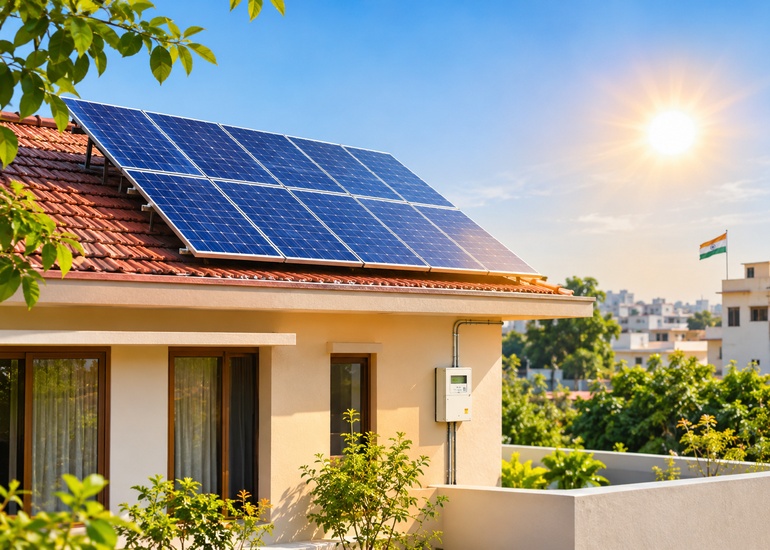
How to Get Free Electricity with Solar Rooftop Panels in India: A Smart & Sustainable Guide
Installing solar rooftop panels in India has become an increasingly attractive option for households looking to reduce electricity expenses and adopt cleaner energy. With rising power consumption and changing electricity tariffs, generating your own electricity can offer significant long-term savings. Government initiatives such as the PM Surya Ghar Muft Bijli Yojana have also made residential solar installations more accessible through financial subsidies for eligible consumers.
However, getting free electricity does not mean that every household will have zero electricity bills automatically. The actual savings depend on system capacity, sunlight availability, electricity consumption, and applicable net-metering policies. With the right planning and reliable solar equipment from a provider such as Solar India, homeowners can make a practical move towards affordable and sustainable electricity.
1. Understand the PM Surya Ghar Muft Bijli Yojana
The Indian government introduced the PM Surya Ghar: Muft Bijli Yojana to encourage residential rooftop solar adoption. The scheme aims to help one crore households generate their own electricity and receive the benefit of up to 300 units of electricity per month through rooftop solar installations.
Under the scheme, eligible residential consumers can receive the following central financial assistance:
| Solar system capacity | Government subsidy |
|---|---|
| 1 kW | ₹30,000 |
| 2 kW | ₹60,000 |
| 3 kW or above | ₹78,000 maximum |
The subsidy makes solar installations more affordable and reduces the initial investment. However, eligibility conditions, approved installation procedures, and applicable DISCOM requirements must be followed.
2. How Do Solar Rooftop Panels Generate Free Electricity?
Solar rooftop panels convert sunlight into electrical energy through photovoltaic cells. The electricity generated can be used to operate household appliances such as fans, lights, refrigerators, televisions, and washing machines.
A typical grid-connected solar system works through these components:
• Solar panels: Capture sunlight and generate DC electricity.
• Solar inverter: Converts DC electricity into AC electricity for household use.
• Net meter: Records electricity imported from and exported to the electricity grid.
• Mounting structures: Secure the panels on the rooftop.
• Electrical protection: Helps protect the installation against electrical faults.
During sunny hours, your household can use the electricity generated by the panels. Any surplus electricity can be exported to the grid under the applicable net-metering arrangement.
3. How to Apply for Government Solar Subsidy in India
Applying for the rooftop solar subsidy involves a straightforward online process. Residential consumers can use the official PM Surya Ghar National Portal.
Follow these steps:
1. Visit the official website
2. Register using your state, electricity distribution company, and consumer account details.
3. Submit the rooftop solar application.
4. Wait for feasibility approval from your DISCOM.
5. Select an eligible registered vendor and get the system installed.
6. Complete the net-metering process and DISCOM inspection.
7. Submit the required installation details and bank information.
8. Receive the eligible subsidy directly into your registered bank account after commissioning and verification.
Always check the latest scheme conditions before applying, as requirements may vary depending on the electricity distribution company.
4. Choose the Right Solar Rooftop System for Your Home
Selecting the correct solar capacity is important for maximising electricity savings. Your choice should depend on monthly consumption, available rooftop space, sunlight exposure, and household requirements.
Here is a general reference for residential consumers:
| Monthly electricity consumption | Suggested solar capacity |
|---|---|
| 0–150 units | 1–2 kW |
| 150–300 units | 2–3 kW |
| Above 300 units | Above 3 kW |
For example, a household regularly consuming around 250 units monthly may consider a 2–3 kW installation, subject to a proper site assessment. A professional installer can help determine the suitable capacity.
5. Net Metering: Make the Most of Your Solar Electricity
Net metering is an important feature of grid-connected rooftop solar installations. It allows households to send excess electricity generated by their panels to the electricity grid.
For example, if your panels generate more electricity than your household consumes during the day, the surplus can be exported. When solar generation is insufficient, electricity can be drawn from the grid.
The final bill is calculated according to the applicable state regulations and DISCOM billing arrangements. Fixed charges and other applicable fees may still appear even when solar generation covers most of your consumption.
6. Important Factors to Consider Before Installing Solar Panels
Before investing in solar energy, evaluate your property's suitability and installation requirements.
Consider the following:
• Rooftop space: Ensure sufficient unobstructed space for the required number of panels.
• Sunlight exposure: Avoid areas affected by shadows from trees, buildings, or water tanks.
• Roof condition: Check whether the roof can safely support the mounting structures.
• Equipment quality: Choose reliable solar panels, inverters, and electrical protection components.
• Maintenance: Keep panels clean and arrange periodic system inspections.
• Warranty: Understand product and performance warranty conditions before purchasing.
These checks can help prevent installation problems and support better long-term performance.
7. Why Choose Solar India for Your Solar Energy Requirements?
Choosing suitable solar equipment and installation support is an important part of your transition towards renewable energy. Solar India helps customers explore solar energy solutions according to their electricity requirements and installation needs.
Whether you are considering a residential rooftop project or looking for dependable solar products, evaluate the equipment specifications, system compatibility, warranty coverage, and technical support before making a purchase.
With the right planning and quality components, rooftop solar can become a valuable long-term investment for reducing conventional electricity consumption.
Conclusion
Getting free or low-cost electricity through solar rooftop panels in India is becoming more achievable with government support and improved solar technology. Schemes such as PM Surya Ghar Muft Bijli Yojana help eligible households reduce installation expenses, while net metering makes surplus electricity useful. However, actual savings depend on electricity consumption, solar generation, local regulations, and system capacity. By selecting appropriate equipment and planning your installation carefully, you can enjoy long-term financial and environmental benefits. Explore suitable solar solutions with Solar India and take a practical step towards cleaner, more affordable electricity.
Ready to make the switch to solar energy? Connect with Solar India to explore solar products and find solutions that match your household's energy requirements.
Frequently Asked Questions
1. Can I get 300 units of free electricity through solar panels?
Eligible residential households can benefit from the PM Surya Ghar scheme, which aims to provide up to 300 units of free electricity monthly through rooftop solar. Actual savings depend on system generation and household consumption.
2. How much government subsidy is available for rooftop solar panels?
Under the central scheme, eligible residential consumers can receive ₹30,000 for 1 kW, ₹60,000 for 2 kW, and a maximum of ₹78,000 for systems of 3 kW or higher, subject to scheme conditions.
3. Can solar panels eliminate my electricity bill completely?
Solar panels can significantly reduce electricity expenses, but a zero bill is not guaranteed. Fixed charges, additional consumption, taxes, and other applicable fees may still be payable.
4. What happens when solar panels generate more electricity than I need?
With an approved grid-connected net-metering arrangement, surplus electricity can be exported to the electricity grid. The adjustment or compensation for excess generation depends on applicable state electricity regulations.
5. Do solar rooftop panels work during cloudy weather?
Yes, solar panels can generate electricity during cloudy weather, although their output generally decreases because less sunlight reaches the photovoltaic cells. Generation also varies with season and weather conditions.